

How using reference images taught me about sexual innuendo in art


The “sketchbook scaries” are what you get when you’re excited about an idea but paralyzed by how you’ll actually draw it. Your mind jumps ahead to the anxiety of sharing your work instead of staying in the moment and enjoying the artistic process. One helpful trick–or “hack,” as I call them–to make concept art less intimidating is to use another piece of art as a reference. This frees me from making the big, spooky decisions around perspective, lighting, and composition, and instead skip to the fun stuff, like exploring the style, story, and setting. Using another piece of art as a reference image in its entirety is a no-no in the art world, so to be crystal clear, these are just sketchbook explorations. I’m not a monster!
My favorite non-internet place for finding reference images is the Minneapolis Institute of Art (or Mia if you’re in a big hurry), which houses an amazing collection of 16th and 17th century Dutch paintings. As a real “Joe Sixpack” when it comes to art appreciation, I’ve always eschewed the grandeur and sanctity of Baroque art, or the distorted poses of Mannerism, in favor of the murky palettes and representations of everyday life in Dutch art. Those guys get me!
I vaguely remembered from my high school art history class that unlike many other European painters at the time, Dutch artists favored depicting scenes of everyday life. Many other European artists at the time were hot to trot to paint aristocrats or religious themes, so why did the Dutch buck the trend? The world of Hyphamancer will be set in a similar time period as the Golden Age of Dutch art, so I was curious to learn more. This inquiry led me down a meandering rabbit hole through history, which ultimately led, as most internet research does, to sex.
The power of reading
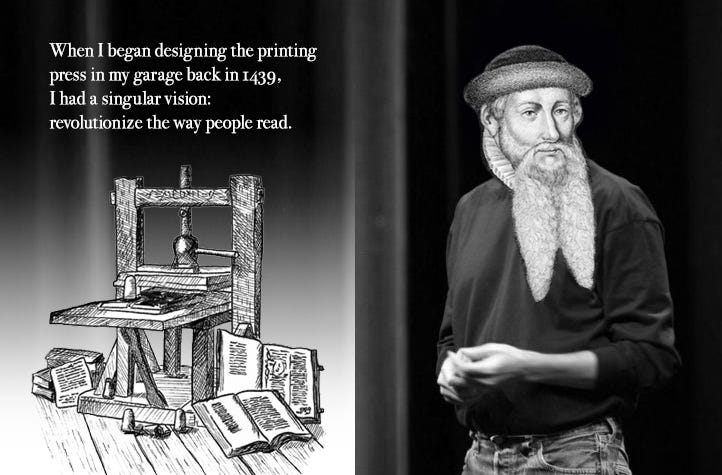
Up until the mid-15th century, books were hand-printed or hand-copied by boys in monasteries. This all changed when Gutenberg unveiled the printing press in 1440. The printing press was a huge disruptor for the publishing industry and finally ended Big Scribe’s millennium-long reign over reading materials. It also opened a firehose of ideas, information, and communication across Europe, upending political and religious dominance and shifting power dynamics from an educated, elite minority to a new, intellectual-hungry middle class.
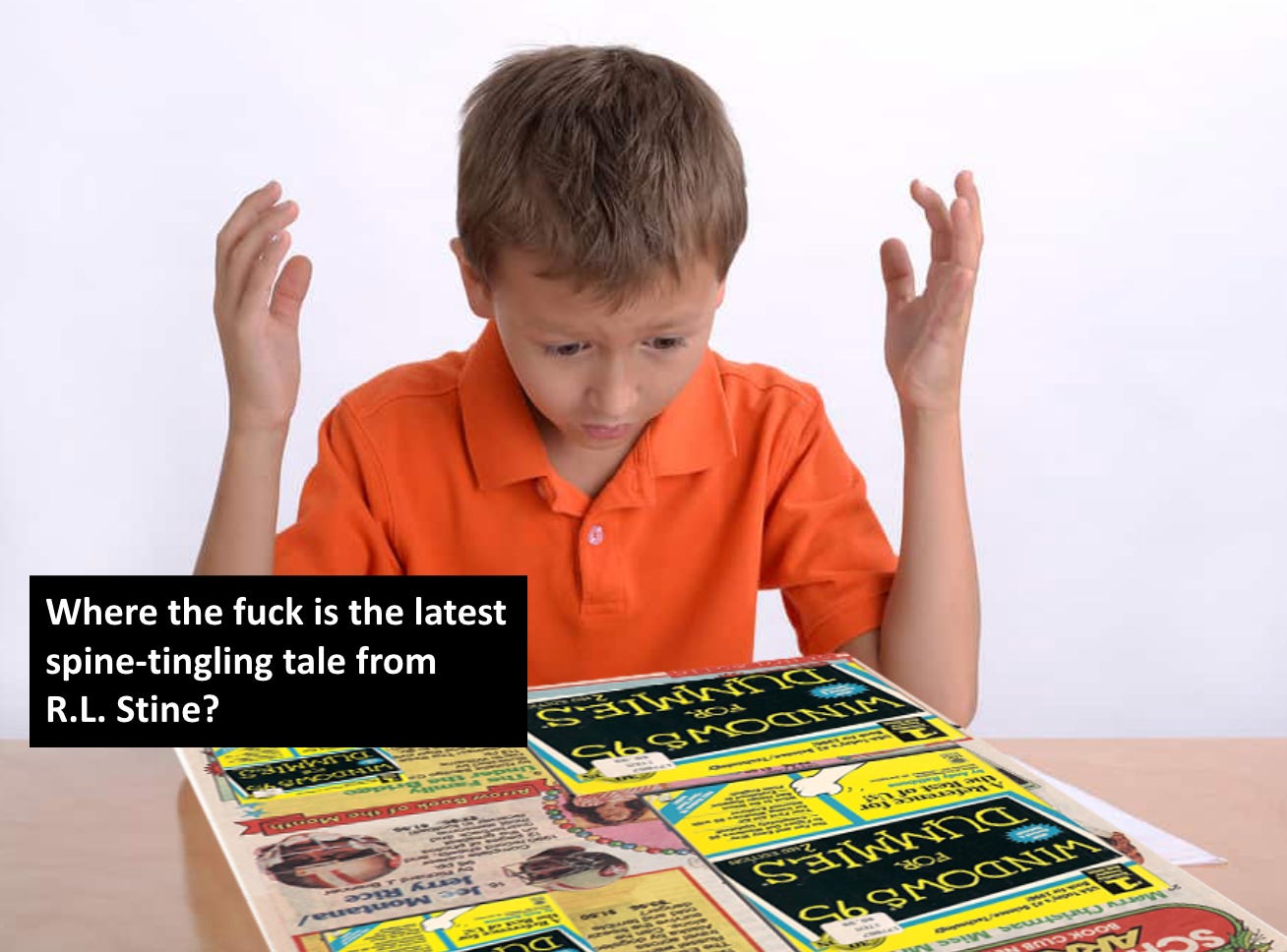
By the 1500s, Holland was the most literate (able to read and write) country in Europe. Most classics had yet to be mass-produced in print, which was probably distressing for the eager-reader middle class, whose reading materials were limited to the Bible or a metrical book of Psalms. I imagine this was like being an elementary schooler tearing open the latest Scholastic Book Club brochure and discovering the only books available for order are Windows 95 for Dummies and a sing-a-long chapter from Windows 95 for Dummies.
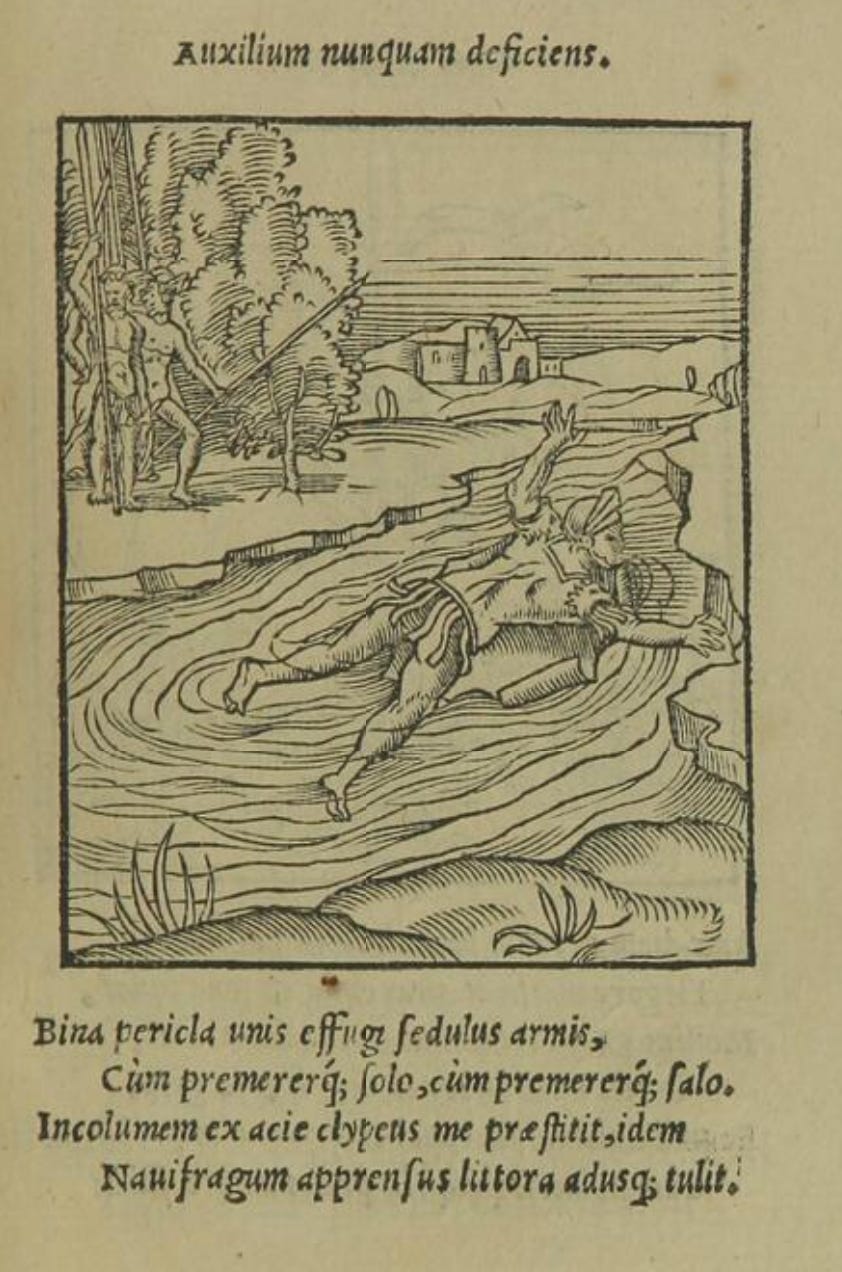
This all changed when emblem books hit the shelves. These were collections of allegorical illustrations, which were accompanied by text, like poems or morals, often containing a hidden meaning. In other words: picture books with secret messages. Which might sounds childish in modern terms, but for a people just getting exposed to ideas (and pictures!) outside of the Bible for the first time, it must have been like being forced to listen to easy-listening for centuries and then getting exposed to the Beatles, where every Beatle’s song has a secret message, like “Paul is dead, Paul is dead”.
Hidden-meaning-mania was not unique to books, visual art became rife with moralizing themes or double entendre. In the 1500 and 1600’s, most Dutch lived in poverty but there was a growing merchant class who were making big bucks from maritime trade (and slavery/colonialism!). This nouveau riche merchant class had doubloons burning holes in their pantaloons, and they wanted to buy art. Gimme, gimme, gimme! Artists began churning out portraits, landscapes, and still lifes (still lives?) for these new patrons, but scenes of everyday life, like brothels, bawdy taverns, and paintings with sexual innuendo, resonated on a deeply personal level with these new art connoisseurs, who were rich white guys.
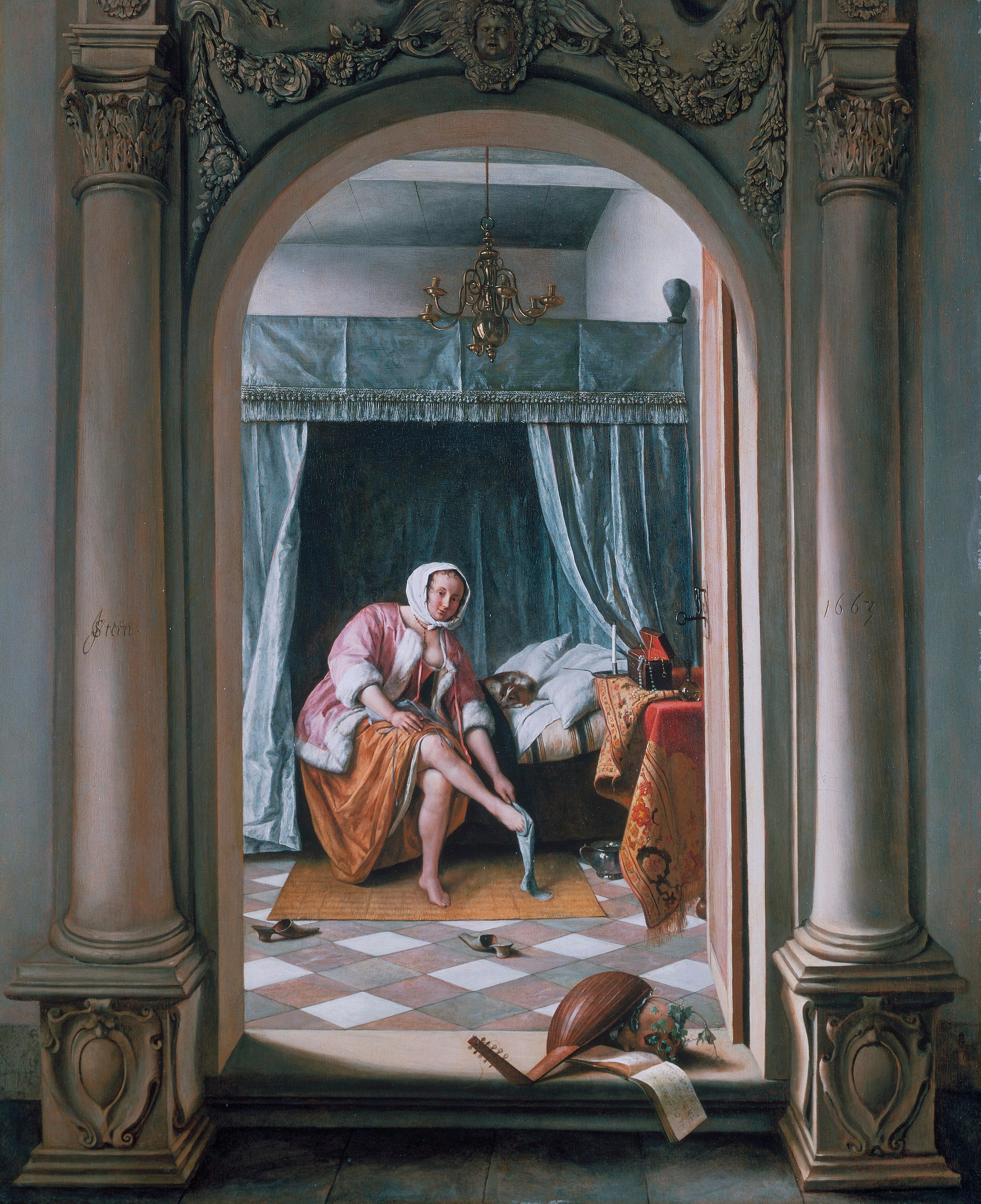
Having a painting with a horny hidden meaning was probably a way for merchants to boast “I’m rich but I’m also a cool guy”, like having truck nuts dangling off your Chevy Silverado. Innuendo was sometimes visually suggestive—like a spout or an overturned jug, iconic—like grapevines being a classical symbol of fertility, or it could be a play off of Old Dutch slang. Stockings (kous) in a painting can also mean sex. A lute (luit) is a vagina. IYKYK.
Visual symbolism, both kinky and moral, continued in Dutch art throughout the 1700’s but as everyday life as a subject matter in art spread throughout Europe over time, so did the diversity, complexity, and richness of underlying messages. Sure, you’d still get some not-so-subtle symbols, like Salvador Dalí’s Anthropomorphic Tower or Grey Lines with Black, Blue and Yellow by Georgia O’Keeffe, but you’d also get more opaque symbolism, like with Pablo Picasso’s Guernica. Neat!
Wrapping it up back to the world of Hypamancer
Anyways, how does all of this connect back to my world-building project? I’m still exploring the themes of Hyphamancer, but I know the world will be set in a medieval renaissance time frame where society is governed by feudal corporations instead of the church or nobility. What kind of art do the wealthy, corporate elite commission? Is it corporate propaganda art, like in Severance?
Other questions before I go:
If the church isn’t a dominant force in this world, does that mean that the society is less sexually repressed (meaning less of a need for hidden innuendo in art)?
Will print as a technology exist in this world?
What is the hidden meaning, if any, in art in the world of Hyphamancer? Would it be politically subversive (i.e. pro-worker’s rights against corporate rulers?
Fascinating stuff - who knew the Dutch could make the everyday and banal so titillating!? Not this guy - thanks for unlocking my new lute fetish!